

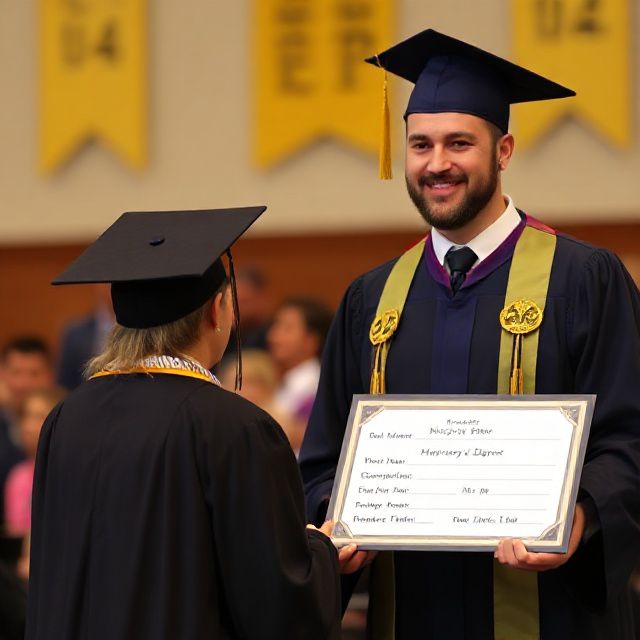
Honorary Degree
What is an Honorary Degree?
The Definitive Guide to Awarding Honorary Degrees
Protect Your Institution's Prestige. Navigate the Complexities of Honorary Degrees with Confidence.
Authorized by the American University of Religious Awareness, Form United States of America.
This comprehensive program provides university leadership, legal teams, and honorary degree committees with the essential frameworks, policies, and protocols to administer honorary degrees with integrity, avoid reputational risk, and enhance your institution's standing.
A Foundational Resource for University Governance | Downloadable Templates & Models | Expert Guidance
Why a Formalized Honorary Degree Program is Essential
An honorary degree is one of the highest honors an institution can bestow. Yet, without clear governance, the process can lead to controversy, ethical dilemmas, and public relations crises. This program equips your team with the tools to:
* Uphold Institutional Prestige: Ensure every award reflects your university's values and enhances its reputation.
* Mitigate Legal and Ethical Risk: Navigate donor relations, conflict of interest, and post-award controversies with clear, defensible policies.
* Standardize Excellence: Implement a rigorous, transparent nomination and selection process that withstands scrutiny.
* Execute Flawlessly: Master the ceremony logistics, diploma design, and public communications for a seamless honor.
Who This Program Is For
This resource is designed for the stewards of institutional legacy:
* University Presidents, Chancellors, and Provosts
* Board of Trustees and Board of Governors Members
* Honorary Degree Committee Chairs and Members
* General Counsel and Legal Affairs Officers
* Chief Communications and Marketing Officers
* Chief Development Officers and Advancement Leaders
* University Secretaries and Chief Protocol Officers
Program Curriculum: A Comprehensive Framework
Our curriculum is structured to guide your institution from foundational philosophy to operational execution.
Module 1: Foundations & Meaning
* The What and Why: Understand the historical roots, modern purpose, and types of honorary degrees (D.Litt., D.S.C., D.H.L., etc.).
* Selecting the Right Recipient: Move beyond "celebrity" to identify individuals who embody true moral leadership, social impact, and intellectual contribution.
* Degree Mapping: Learn how to match the honorary degree field (e.g., Doctor of Humane Letters, Doctor of Science) to the recipient's life's work.
Module 2: Policy, Governance & Ethics (The Core of the Program)
* Drafting a Robust Policy: Access sample policy language and adaptable clauses for your institution's unique needs.
* The Nomination Process: Establish a clear, fair pathway for nominations, including committee composition, due diligence, and approval mechanics.
* Navigating Ethics: Implement critical conflict-of-interest and donor ethics policies to avoid "pay-to-play" perceptions.
* Revocation Protocols: Prepare for the worst with a clear, fair process for investigating post-award conduct and managing revocation, if necessary.
Module 3: Operationalizing the Award
* Nomination Packets & Rubrics: Utilize templates and scoring matrices to evaluate candidates objectively.
* Ceremony & Protocol: Master commencement scripts, citation language, diploma design, and regalia logistics.
* Budgeting & Cost Control: Plan and manage the expenses associated with the award process and ceremony.
Module 4: Communications, Legal & Global Perspectives
* PR & Messaging: Develop press releases, social media plans, and strategies for managing potential controversy.
* Legal & Accreditation: Understand accreditor perspectives, mitigate legal risks, and prevent misrepresentation.
* International Practices: Gain cultural sensitivity for awarding degrees across borders and understanding global variations.
Module 5: Case Studies & Lessons Learned
* Analyze High-Profile Cases: Learn from real-world examples of successful conferrals, backlash, and controversies.
* Engage in Ethical Debates: Explore reform proposals and balance institutional autonomy with public accountability.
Appendices: Ready-to-Use Resources
* Catalog of Honorary Degree Fields: A comprehensive list of traditional and emerging specializations.
* Model Legal Clauses: Pre-drafted clauses for policies and agreements.
* Sample Completed Packets: See examples of successful nominations
Contact Us | Privacy Policy | © 2026 AURA. Honoring the Doctors of Life.







Get Your Course With Us
Introduction to Sikhism:...
Journalism Courses & Medi...

Human Rights & Religious...

DOCTOR OF NONPROFIT FINAN...